

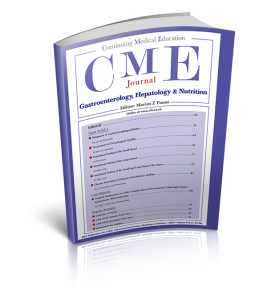
Description
Welcome to the third issue of 2008. In this issue, we revisit Hepatology,
through a series of four articles written by experts in their respective
fields and three excellent case reports dealing with unusual hepatobiliary
conditions.
Professor Spyros Dourakis, from the University of Athens reviews and updates
us on the diagnosis and treatment of chronic hepatitis B. Drs Dimitroulopoulos
and Paraskevas, from the Agios Savvas Cancer Hospital, also in Athens, write a
comprehensive and up to the minute review of the epidemiology, diagnosis and
treatment of hepatocellular carcinoma. Drs Kwok and Park from the Concord
Hospital, Sydney, provide an excellent review on the prevention and treatment of
variceal haemorrhage in cirrhosis. Drs Manu Nayar and Mark Hudson from the
Freeman Hospital in Newcastle, review liver disease in pregnancy, so continuing our
unbroken series on the interface of gastroenterology with other specialties.
Also in this issue we continue on our journey of endoscopic innovation with an
excellent description and prospective assessment of the early UK experience of
endoscopic submucosal dissection for large bowel lesions, by Drs Suzuki and Brian
Saunders from St Marks Hospital, London.
Three instructive case reports complete this issue: the first reports a well documented
case of ischaemic hepatitis due to supraventricular tachycardia, by Drs Sayer and
McNair from the Queen Elizabeth Hospital, Woolwich; the second case report from
Drs Yoong and Singh describes a novel approach to the management of gallstones
secondary to acute haemolysis, and the third report gives an account of carcinoma of
the ampulla of Vater in a patient with Downs syndrome.
After nearly five years as Editor in Chief of the CME Journal, the time has come for
me to move on. Looking back at the journal, I can see that our publication has evolved
to embrace mainstream and core clinical topics as subjects for review and update.
Through the contributions of our readers we managed to maintain a steady stream of
articles addressing themes such as the interface of gastroenterology with other specialties
and innovation in gastrointestinal endoscopy. Increased interest in the journal is being
reflected in the number of articles submitted spontaneously, which has trebled in
number in the last twelve to eighteen months. For me it has been an instructive as well
as gratifying experience to see the journal grow in this manner. I am thankful to have
had the opportunity to keep in touch and to collaborate with so many colleagues, not
only from the UK but also throughout the world. In the last year or so, I was delighted
to have colleagues from Germany, Singapore and Australia join the editorial board,
who by so doing added a truly international dimension to the journal.
I am especially happy to hand over the editorship to Mathis Heydtmann, currently at the
Liver Unit of Queen Elizabeth Hospital, Birmingham. Mathis has been an enthusiastic
and steady contributor to the Journal, almost since its inception, in 1997. I am sure
that Mathis will take this journal on its journey from this point on, guide it to new
directions and help it grow further, as always relying on the participation of its readers
and increasingly numerous contributors. I wish him every success.


