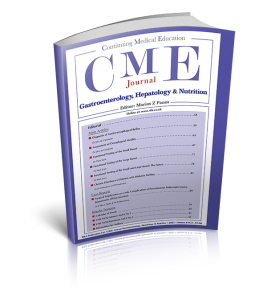
Description
Welcome to the first issue of 2005. I am pleased to say that in the past few months there has been an increasing interest in our journal, which has
been ref lected both in the rise in the number of our regular subscribers as well as a substantial rise in the number of good quality articles submitted for publication.
It has been my intention to try to extend the content of the journal in order to make it more useful and broaden its appeal. In this respect I received a number of
suggestions from readers and following consultations with other members of the
editorial board, we decided to introduce two new concepts: First, starting with this
issue, a series of ‘‘Mini Reviews’’ intended to cover succinctly aspects of basic science
which have an application to clinical gastroenterology, aiming to provide a clinician’s
guide to the use of new technology. In this issue Dr Sunil Dolwani makes an excellent
start to the series with an article on DNA repair and gastrointestinal cancer. Second,
starting from the second issue of 2005, we shall introduce a series of short articles
under the title ‘‘Smooth Guide’’ which aim to pass on ‘‘pearls’’ on how to be effective in administrative and professional matters.
The core of the journal’s content will continue to be the three main review articles
and two or three case reports, along with accompanying MCQs which carry credits for
Continuous Professional Development, as approved by the Royal Colleges.
In this issue of the journal we proceed with our series on the interface between
gastroenterology and other medical disciplines, with an excellent article on the hepatopulmonary
syndrome by Drs HE Davies and CG Wathen. Also in this issue Drs
Konstantina Paraskeva and John Karagiannis present a comprehensive review of
current scoring systems and biochemical methods of assessing severity and prognosis in
acute pancreatitis and give us a preview of future developments in the field. The third
main article in this issue is contributed by Catherine Pearson, Nurse Specialist in
Inflammatory Bowel Disease, who describes the process by which a specialist nurseled,
direct-access inflammatory bowel disease clinic was set up and the way in which
its impact on the local gastroenterology services was demonstrated. In addition to
demonstrating the value of a nurse-led inflammatory bowel disease clinic, Ms Pearson
provides an excellent methodological model for setting up any new service: identifying
the need and quantifying the problem by conducting an audit, providing the service to
address the problem and subsequently re-auditing to measure the impact of the
intervention.
Our two case reports for this issue comprise a rare case of yellow discolouration of the skin, submitted by Drs Pravin Jha and Shahid Kausar and a case submitted by Dr Lye Quen Hon and colleagues, in which they discuss the role of imaging in the investigation of post-ERCP pain.