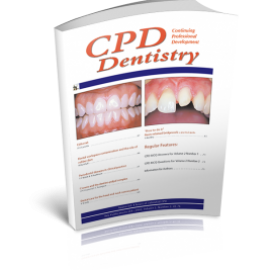
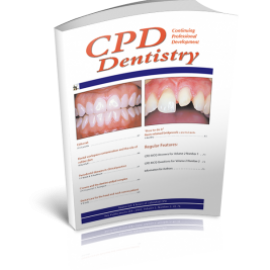
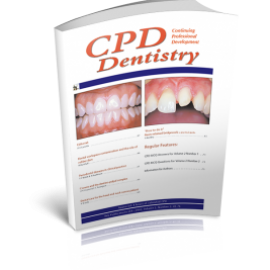
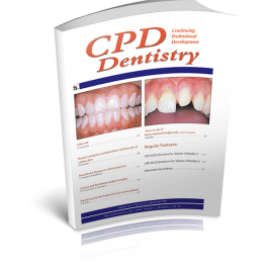
Description
Handbook of Dental Trauma
A practical guide to the treatment of
trauma to the teeth
M.E.J. Curzon
Professor of Child Dental Health
Leeds Dental Institute
M.S Duggal
S.A.Fayle
K.J Toumba
with contributions by
E.A. O’Sullivan
J.F. Tahmassebi
Publisher:
Reed Educational & Professional
Publishing Ltd 1999
Pages: 177
ISBN: 0-7236-1741-4
Price: 16.99
A dental student recently button-holed me after the final written papers. I didn’t like your question, Mr Carrotte, (identified because it was about endodontics), it wasn’t anything from our notes and the only way to answer it was to think and try to apply our knowledge!
This textbook is for thinking students! It treats the subject of restorative dentistry as an entity in its own right. Indeed, the author states in the introduction that he has deliberately avoided dividing the subject into its component specialist subjects. The book is intended for senior undergraduates and the newly qualified practitioner. It would, however, make a useful addition to any practice library, especially the training practice.
A criticism frequently levied at dental students is that they are quite unable to draw up a treatment plan. I have made the accusation myself, yet one sentence in this book has perhaps changed my opinion. Whilst making a diagnosis is an intellectual challenge, the formulation of the treatment plan has to combine experience, ability and common sense. Experience, of course, is what the undergraduate student cannot acquire!
This textbook presents restorative dentistry under five logical headings; the patient; restorations and their environment; clinical management and techniques; fixed and removable prosthodontics; and problems. There is no doubt that the book will be an asset to the undergraduate student in their basic acquisition of knowledge. However, once the qualified dentist has gained the necessary experience, he or she may return to the book with a new vision. Only now will it be understood that a single diagnosis may have two or three equally ‘correct’ treatments.
The text is easily readable with many tables, bullet points and line drawings. There are still, however, large areas of plain print, and consideration might be given in future issues to increasing the number of illustrations even further. That apart, it is an excellent general text on restorative dentistry, and I highly recommend it.